How do we prepare for and complete a Water Revitalization Plan project? With your help! Community engagement is a part of every step of the process.
The Water Revitalization Plan (WRP) includes dozens of projects, large and small, carefully planned over the coming decades. We’re sharing a peek at the process, from start to finish, and how we’ll keep our communities informed every step of the way.
How can you play a part?
Philadelphia is a diverse city. Its residents bring a wide variety of strengths and skills, and many help us share the story around the importance of big water infrastructure projects. Whether serving on our Stakeholder Advisory Group or supporting more informally, here are some of the roles our community has filled so far:
The Curator
Curators help us tell our story effectively with their community. They sort through content and make sure the important topics and messages rise to the top.
Skills: Storytelling, organization, historical knowledge
The Listener
Listeners have a sense of what is important to their groups. They show up to meetings and events with a collaborative mindset. Often found at community events, plugged into the local news, or watching their community’s social channels.
Skills: Navigating community concerns

The Bridge Builder
Bridge Builders bring people in their community together around common values and inspire connection between different groups. They show up to meetings and events with a collaborative mindset.
Skills: Collaboration, empathy, openness
The Creative
Creatives bring new ideas to the table, helping us refine our messages, materials, and outreach tactics in creative and engaging ways.
Skills: Perspective, ingenuity

The Advocate
Community members look to Advocates for reliable information and to represent them on critical issues.
Skills: Credibility, trust, persistence

The Vocal Local
Vocal Locals are in the community talking to folks and have a sense of the events and activities going on. They know who to talk to and how to reach different audiences and enjoy sharing updates and news.
Skills: Community network, sharing ideas
The Quiet Collaborator
Quiet Collaborators prefer to listen versus being the loudest ones in the room. They may engage folks via social media or impactful small group discussions.
Skills: Encouraging others to open up
Community input: vital at every phase
As we go through the steps of planning and building a WRP project, community members that fulfill each of these roles are vital to our engagement strategy. Every role is useful in each project phase, and we’ve listed some examples of how each and every community member can get involved.
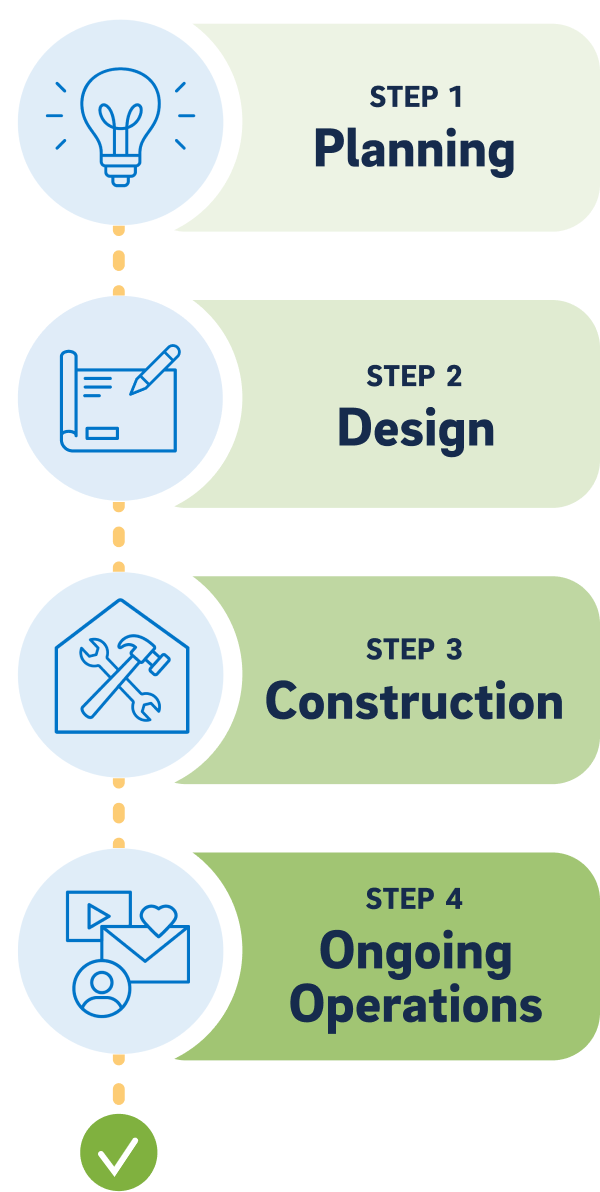
Planning
Planning is one of the most important steps in any WRP project, and it can take anywhere from one to several years to complete. During this phase, we study the problem and explore different way to address it. We develop and compare options based on:
- How they meet our goals
- How easily they can be built
- Cost
- Impact on neighbors
By the end of planning, the most feasible option is selected and key decisions, such as the general location, are made before detailed design begins. Once the best option is identified, we share early information about the project and begin building relationships with neighbors in the surrounding area. Early community input helps guide key decisions before design begins, leading to more practical solutions that benefit Philadelphians for generations to come.
In the planning stage, the Listener can start sharing to their community that a new project is in the works in their area. Meanwhile, the Curator can work with us to make sure that messaging is prioritized in the best way for their community
Design
In the Design stage, the Vocal Local is necessary in order to gather feedback and keep a finger on the pulse of what neighbors are thinking and wondering. What are the key concerns in this neighborhood? The Vocal Local can bring them to us as we continue on the planning timeline. The Creative is also vital in this stage, as they can help us shape our messaging to make sure that all the key concerns from the community are addressed.
Construction
During pre-construction and construction, the Advocate can be a mainstay in how questions and concerns are shared between the community and PWD. If issues arise during construction, the Advocate is vital to keeping communications and messaging flowing between community members and the construction team. Always remember that while construction impacts are temporary, the benefit to the community is long lasting.
Ongoing Operations
As the project is completed and operations are ongoing, the Bridge Builder and Quiet Collaborator can use their skills to make sure that engagement continues with the community and that any updates from the construction team or PWD are always shared with the neighborhood.