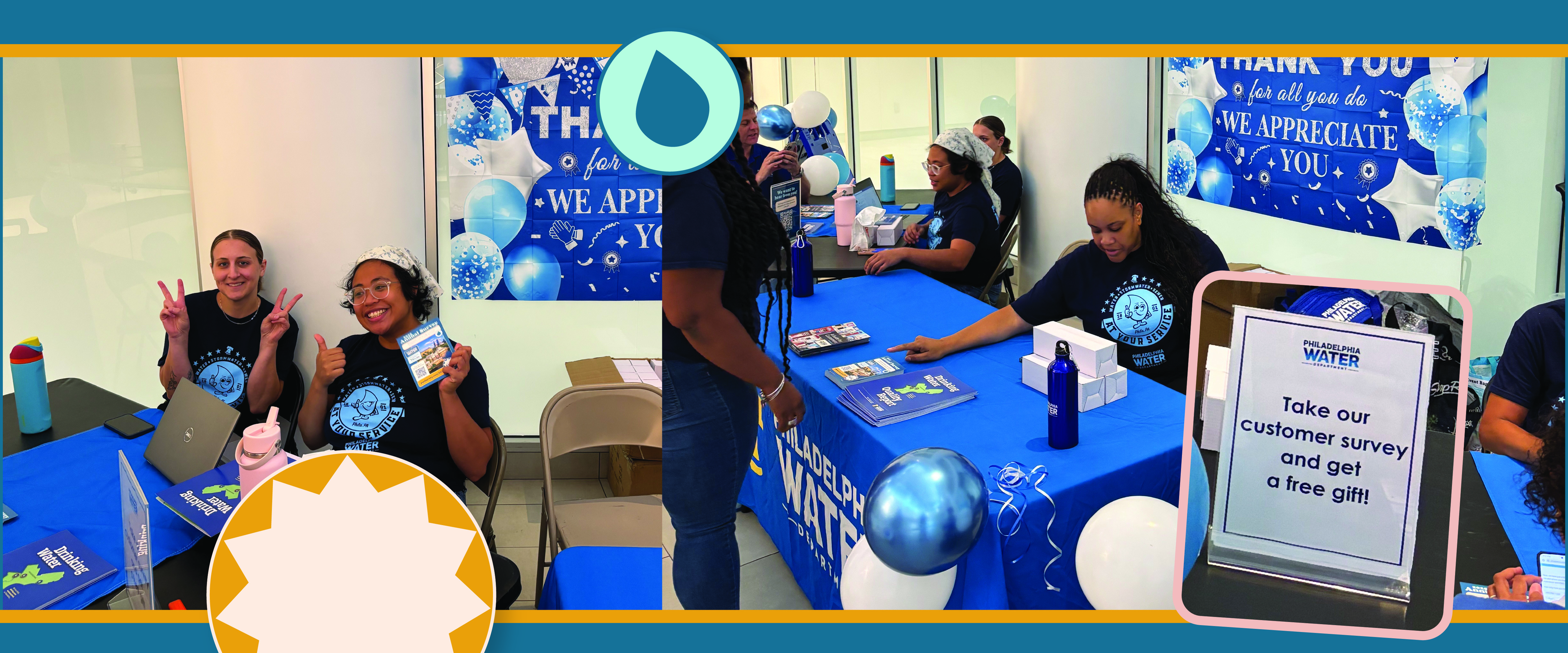
Last summer, the Philadelphia Water Department (PWD) – in partnership with ImpactED at the University of Pennsylvania – conducted the 10th annual PWD customer survey.

The survey explored Philadelphia residents’ attitudes, knowledge, and behaviors around our core services. This survey is one piece of a decade of research that has helped PWD inform how it communicates, serves, and builds trust with the public.
In 2025, we found that, while there is consistency with past years on key indicators, there are also some emerging trends that can inform future research and practice aligned with PWD’s 2026-2030 Strategic Plan. We wanted to share: (1) what’s the same, (2) what’s new, and (3) what’s next.
What’s the same?
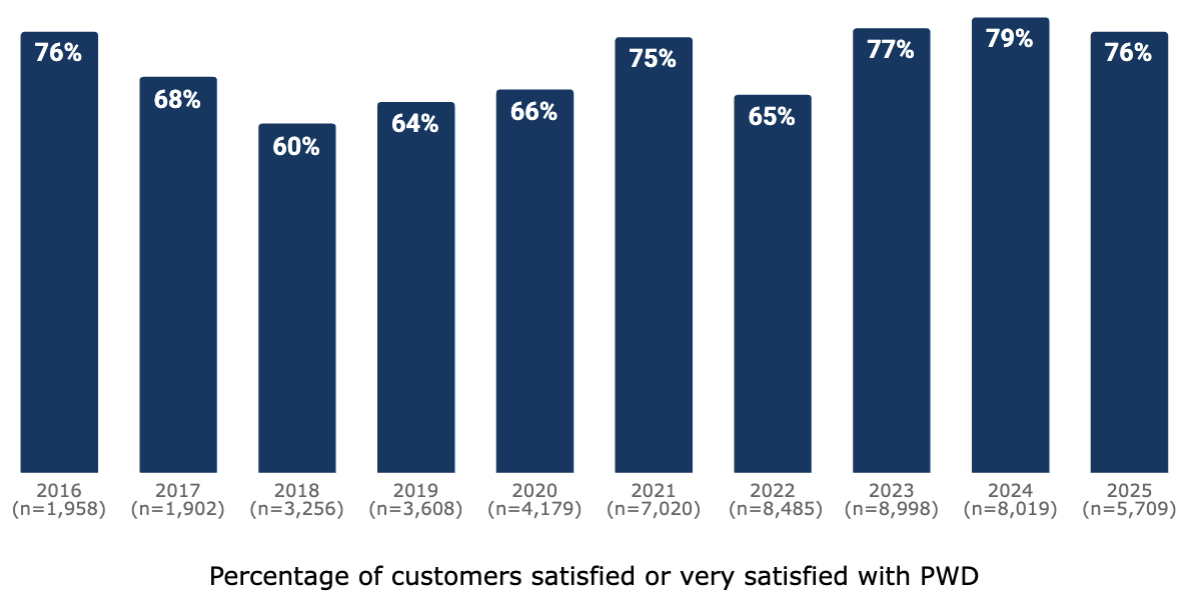
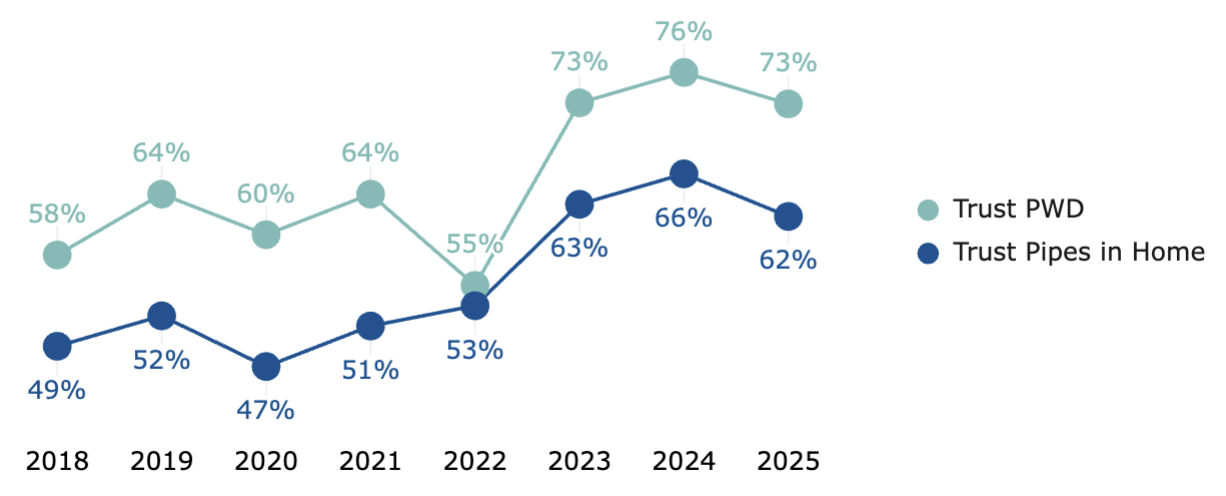
Most customers are satisfied with their PWD experience and trust that PWD is delivering safe drinking water to their homes.
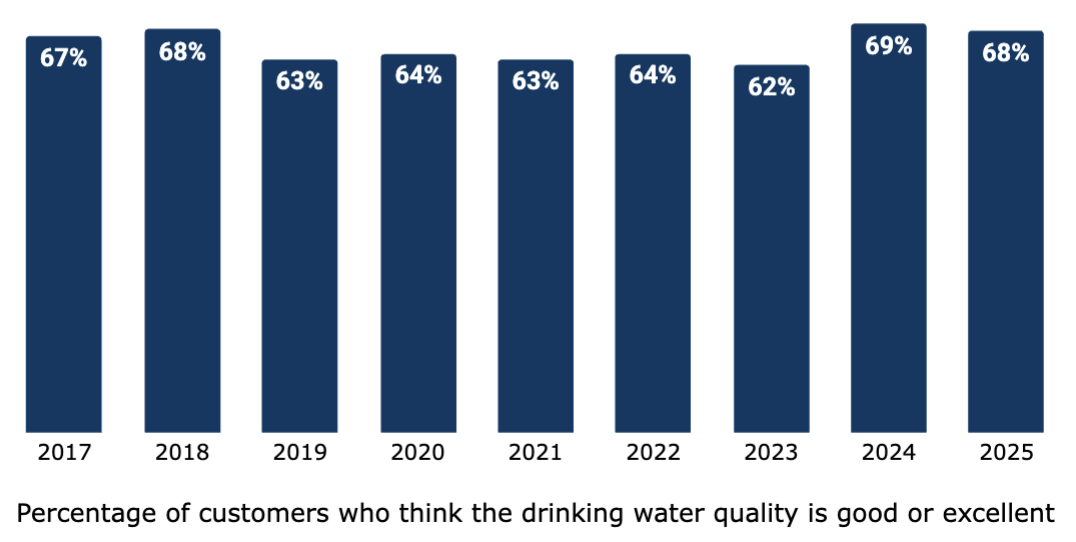
Most customers think the water quality is good or excellent.
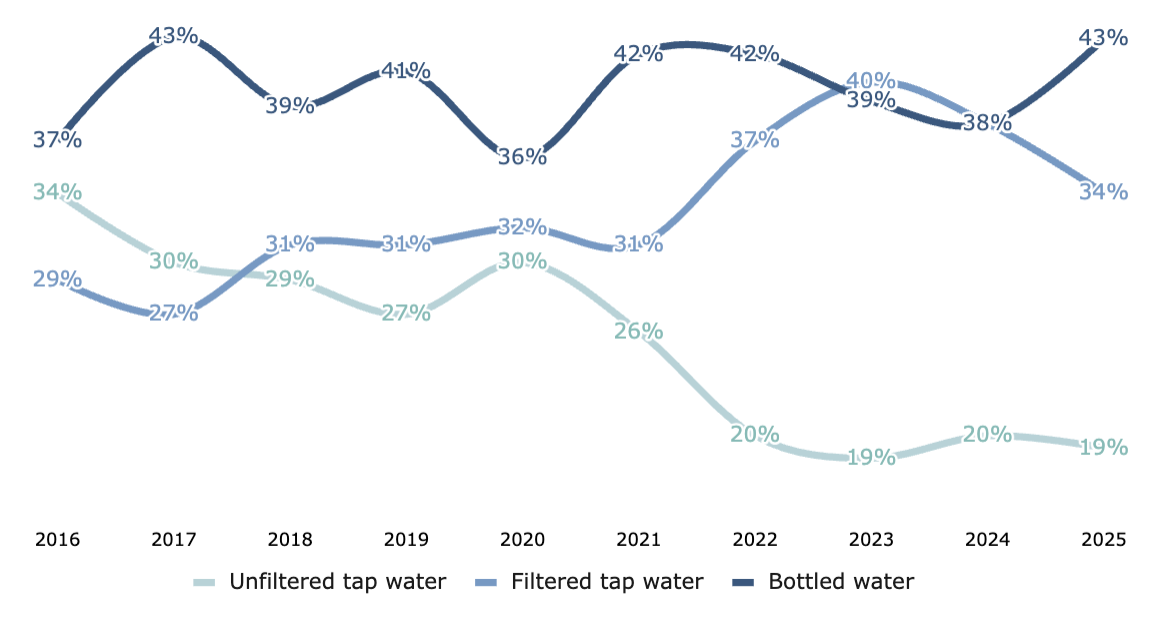
Most customers drink Philadelphia tap water – although trends in drinking filtered vs. unfiltered tap water have changed over the years.
What’s new?
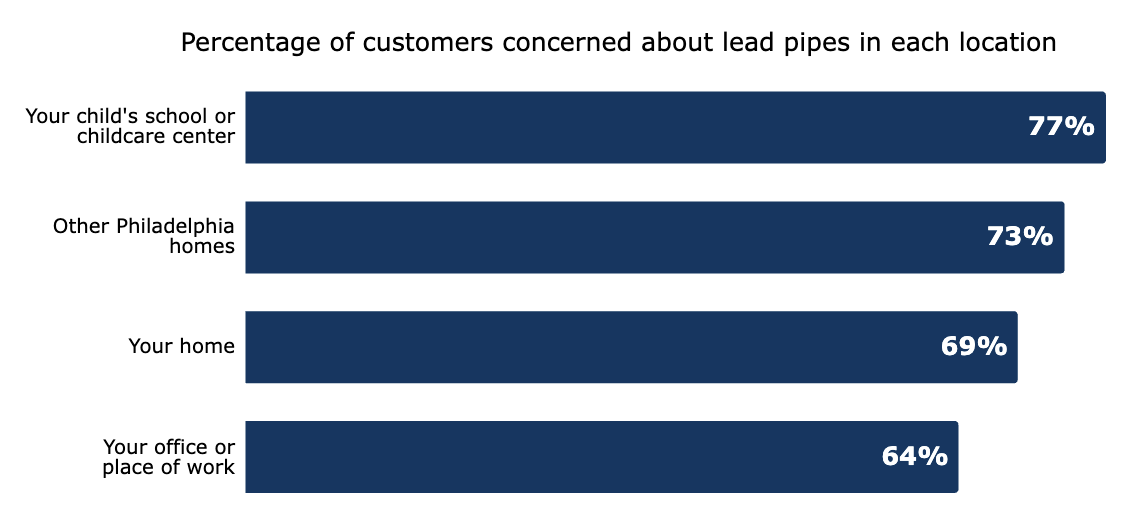
For the first time, the survey included questions specifically related to lead service lines. More than two-thirds of customers said they were concerned about lead in their home pipes. They were even more concerned about lead in other Philadelphia homes or in their child’s school or childcare center.
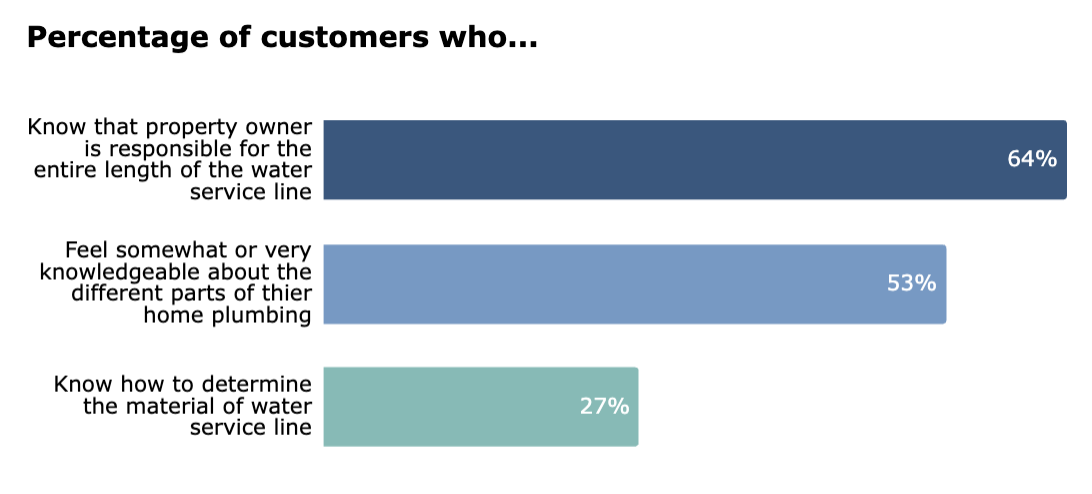
More than half of customers know that the property owner is responsible for the entire water service line. They also feel knowledgeable about the different parts of home plumbing that provide water to their home. However, only about a quarter know how to determine the material of their water service line at the meter.
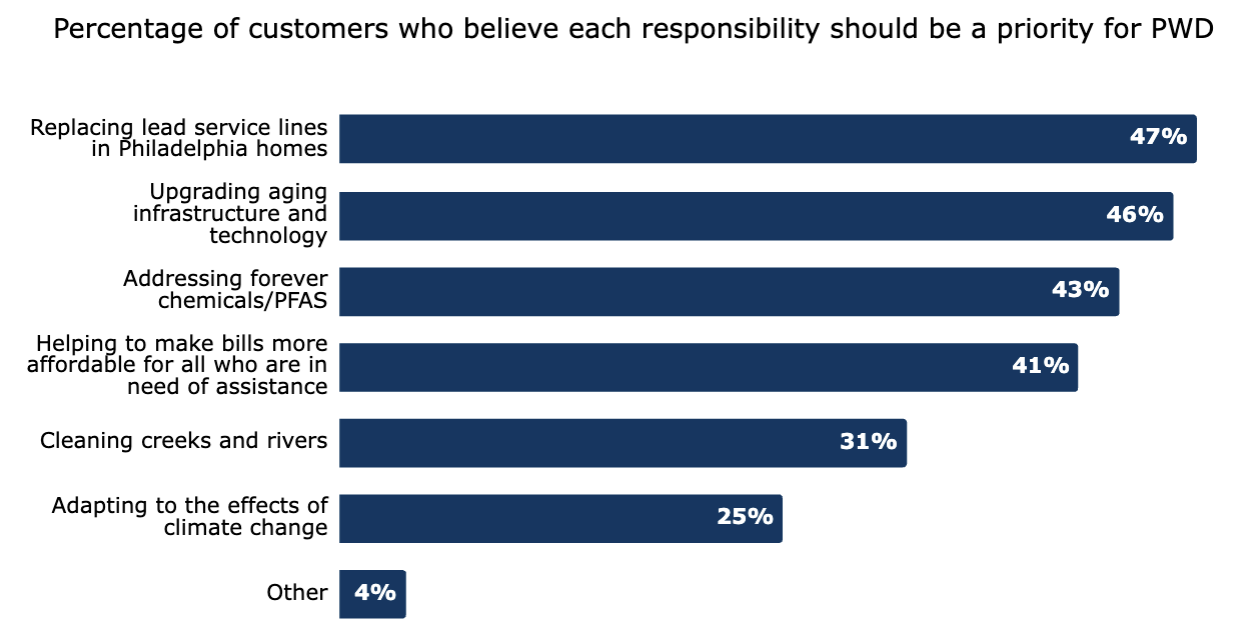
The two responsibilities customers most want PWD to address in addition to its core services (providing safe drinking water, treating wastewater, and managing stormwater) are replacing lead service lines and upgrading aging infrastructure and technology.
What’s next?
Informed by customer survey results, here are some specific ways that PWD is continuing to build a water system that works with residents:
Spreading the word about work that is already happening around key priorities

PWD already has dedicated projects and programs that address issues customers say they want us to tackle. For example, PWD will test water for lead at schools and childcare facilities in Philadelphia for free.
The department is also launching a Service Line Replacement Pilot Program later this year. Customers can use the Service Line Material Map to check the status of their home plumbing. The City also has a multi-decade Water Revitalization Plan to upgrade essential drinking water infrastructure.
Continuing to publish and publicize the Drinking Water Quality Report
When customers know about this report – and know about PWD water quality testing practices – we consistently find those customers have more positive attitudes about PWD and Philadelphia tap water. It is easy to see why those positive outlooks come along with knowing about the annual report: it is where we share things like the latest findings on PFAS in our source water, which customers named as a top concern last year.
Developing additional communications and resources that boost knowledge and awareness of home plumbing
The survey found that not all homeowners are aware that the service line is their responsibility. Even those who are aware aren’t always sure how to test the material or address common issues. In addition to sharing existing resources more broadly, PWD can focus on these areas through ongoing lead service line awareness outreach and resource development. Stay up to day by signing up for lead plumbing and water quality emails at water.phila.gov/lead.
Prioritizing in-person outreach and tailoring events to community needs

Survey results show a strong correlation between trust and interacting with PWD in person. PWD will use 2025 survey findings to plan events where customer trust could be improved. This allows the department to reach more people and to make sure they have the information they need.
Connecting customer priorities to strategic planning priorities
Information about how customers see PWD’s work and what responsibilities they think PWD should prioritize will inform a strategic planning process that has been underway for several years. This will shape how PWD develops its new strategic plan.