Philadelphia’s robust urban gardening and farming community provide many wonderful benefits to residents by:
- Preserving open and green space
- Providing a sense of community
- Making healthy foods accessible
- Fostering natural beauty
- Reducing stormwater runoff by soaking up rain
The purpose of this guide is to support urban garden community groups such as community gardens, food forests, sitting gardens, and orchards. This guide offers a framework to navigate various PWD processes and provide PWD resources that may be relevant to each urban garden community group.
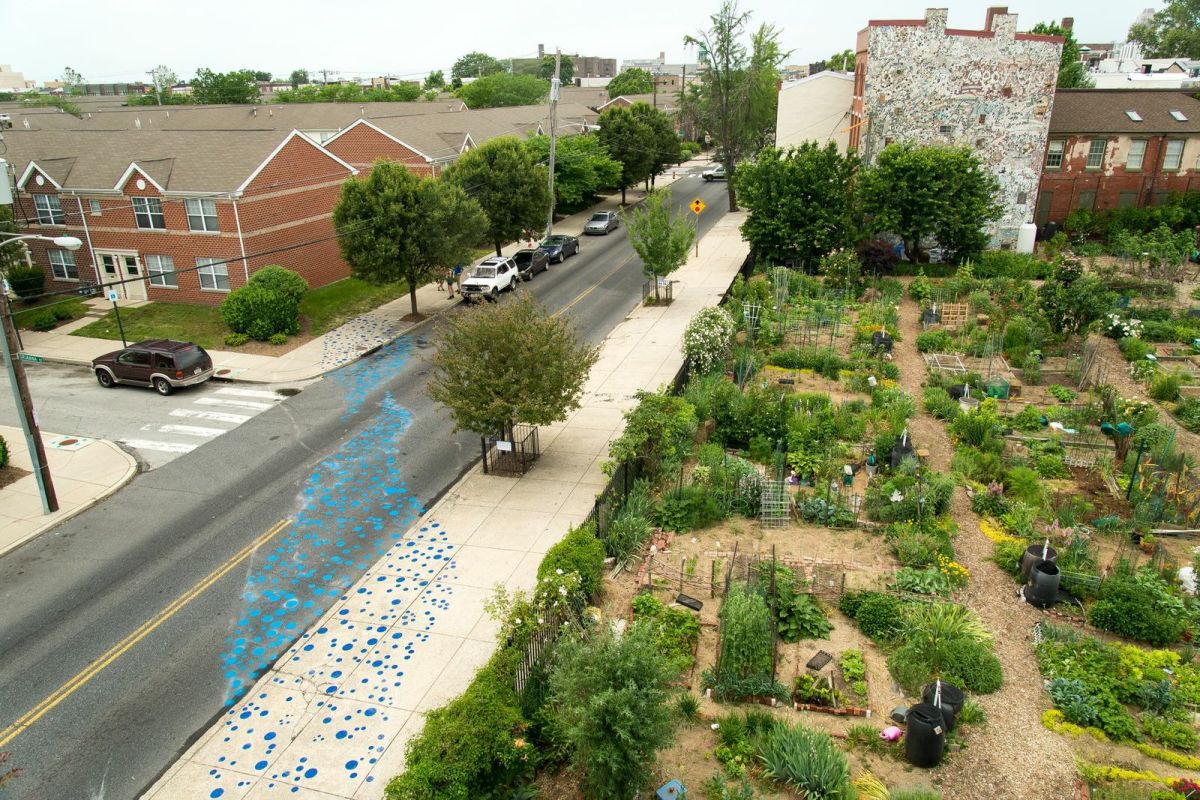
Getting water access
Our goal is to ensure that urban agriculture community groups in Philadelphia, such as community gardens, have access to the water they need to flourish while protecting the safety of the water supply for everyone.
There are several options for urban gardens to obtain water, either year-round or seasonally. PWD recommends urban gardens and farms establish a permanent water service when growers have the capacity and permission to do so. A permanent water service better protects the city’s drinking water supply and is a more reliable and practical source of water.
Gardeners in Philadelphia have four options for accessing water for plants:
1. Private water sources
Private water sources (such as your hose or a neighbor’s) are a low-cost way to water plants. Sub-meters can be installed for those interested in sharing the cost of a garden’s water bill. However, some gardens, especially those on vacant land, are not near available private water sources.
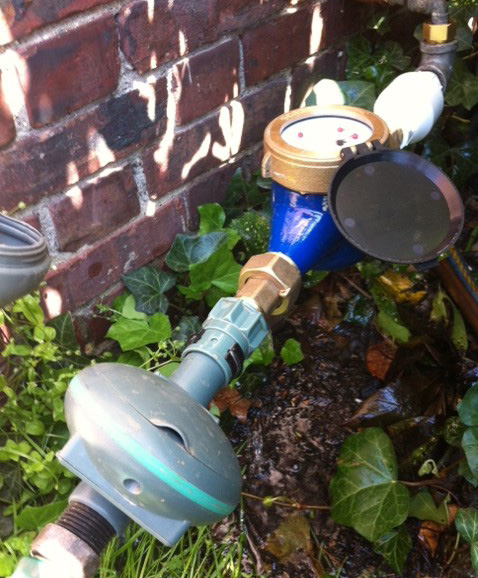
Consult with a contractor to install a sub-meter. Reach out to the PWD Meter Shop with questions at (215) 410-9904.
2. New water sources
To install a new water line connecting to PWD infrastructure, gardeners need to request a Water Connection Permit, submit a Utility Plan, and have a water service installed by a registered plumber that meets PWD’s specifications.
Installation costs for a new water service line can vary depending on factors such as location, distance from water main to garden, and backflow prevention. Urban gardens with their own water meters are responsible for paying for water usage, stormwater, and the water service charge, though discounts are available.
Learn more about installing a new water service ↓
3. Rain collection
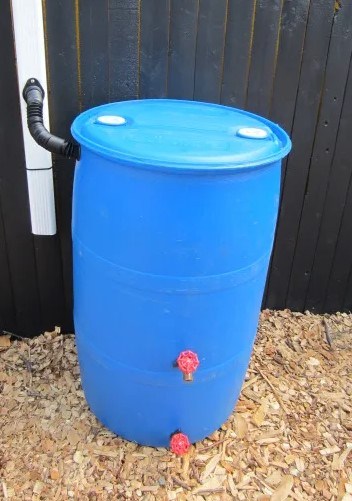
PWD provides free rain barrels to Philadelphia residents through the Rain Check program. This is a great way to collect water for your garden, provided access to a downspout is available and the water collected is safe to use.*
To receive a free barrel, you must attend a Rain Check workshop.
Find a workshop or call (215) 685-6213.
*Note: Runoff from rooftops can contain contaminants and pathogens. Test rain barrel water quality through a certified lab and follow best practices, especially when growing food. If you can’t guarantee safe water, only use rain barrels for non-edible crops.
4. Hydrant permits
Fire hydrants are for fighting fires. They are designed to provide a large flow of water, and their design makes them inappropriate for almost all other uses.
Opening hydrants without proper training and equipment can strain the water supply system, cause water pressure issues, city-wide emergencies, allow contaminants into our water mains, and damage the hydrant, leaving it unavailable when needed to fight fires. To try to prevent this, PWD installs Center Compression Locks (CCL) on hydrants, which require a special key.
However, when no other water source is available, PWD recognizes that, with proper instruction and equipment, certain hydrant uses benefit the community and will issue permits allowing hydrant use.
Learn more about hydrant permits and required equipment →
*Note: Certain uses of fire hydrants are expressly prohibited, including, but not limited to, cleaning streets, recreational activities, and potable use.
Dedicated water service
Installing a new water line
Installation costs for a new water service line can vary depending on factors such as location, distance from water main to garden, and backflow prevention.
To install a new water line connecting to PWD infrastructure, a Utility Plan must be submitted to PWD and a Water Connection Permit obtained.
Urban gardeners are responsible for having a water service installed by a registered plumber with an above-ground enclosure that meets PWD’s specifications for the protection of drinking water quality. See “Preventing backflow” below for more information.
Download these installation diagrams for your plumber
Once the water service line, meter box, and backflow preventer are installed, garden representatives are required to make an appointment with PWD’s Meter Shop for the installation of a water meter: contact Jason Pezzetti, Metering Unit & Permit Supervisor, at jason.pezzetti@phila.gov or call (215) 410-9904.
Ongoing use
- Maintenance and repair of the water service line and the meter box enclosure is the responsibility of garden members.
- A Backflow Registered Master Plumber (BRMP) should be hired to inspect the backflow prevention system annually and winterize the backflow unit to protect against the cold. Some locations may require having the meter removed during the winter. For more information, see Preventing backflow ↓
- Urban gardens with water meters are responsible for paying for water usage, stormwater, and the water service charge. See Assistance for urban gardens and farms ↓ for information on discounts available for eligible community gardens.
Assistance for urban gardens and farms
Discounts for urban gardens and farms
Gardens in Philadelphia may be eligible for two discounts on their water bill. Each discount needs to be applied for separately.
Water Charitable/Non-Profit Organization Discount
The Water Revenue Bureau (WRB) and the Philadelphia Water Department (PWD) offer a 25% discount on water bills through the Charity Water Rates and Charges Discount Program. The program is generally available to charities, places of religious worship, non-profit hospitals, schools, and universities.
Learn more about charity or non-profit water discounts →
Please email any questions to WaterCharityHelp@phila.gov or call (215) 686-6906.
Community Garden Stormwater Discount
Community gardens may be eligible for a 100% discount on their stormwater charges. In order to qualify, the garden must be actively and appropriately maintained, operated for public benefit, and primarily devoted to growing crops for consumption, sale, or donation.
Learn more about Community Garden Stormwater Discounts →
Please email any questions to PWD.StormwaterAppeals@phila.gov or call (215) 685-6244.
HELP for urban gardens and farms
The Urban Garden and Urban Farm Loan is an interest-free, installment payment loan administered by the Philadelphia Water Department for the installation of water service lines to urban gardens and urban farms. Approved applicants will enter into an Urban Garden and Urban Farm Loan Agreement with PWD committing to repay the total cost of the work to the City of Philadelphia.
Use of the loan proceeds is restricted to the cost to install a water service line, backflow preventer, meter and meter box with an underground or above-ground enclosure that meets the Department’s specifications. All work shall be performed by a licensed plumber assigned by the Department and comply with all Department specifications.
Learn more about obtaining a HELP loan or call (215) 685‑4901 for questions.
Preventing backflow
Backflow is when unsafe water flows back into the drinking water supply. It can be caused by a number of situations known as “cross-connections” – things like garden hoses and irrigation lines can create cross-connections and potentially allow dirt, bacteria, or chemicals into our water supply. Good garden habits and backflow prevention devices can help keep you and your neighbors safe.
Safety procedures for all gardens
In order to avoid dangerous cross-connections, please do the following:
- Store hoses in hose rack and do not allow hoses to sit on the ground. When hoses are left laying out, they can create puddles where bacteria and chemicals can pool. These contaminants can work their way up your garden hose and into your hose bib.
- Don’t submerge garden hoses. If you are filling a bucket or rain barrel, keep the end of the garden hose out of the bucket as this provides an air gap. If you leave the hose submerged and backflow occurs, anything in the container can get back into your drinking water.
- Disconnect hose after use.
- We strongly recommend following organic gardening practices. The prohibition of the following substances reduces the risk of cross-contamination: non-organic pesticides and weed-killing sprays, powders and other substances, non-organic fertilizers, and hazardous substances.
- If using drip irrigation, ensure your system has a check valve. Check valves or pressure vacuum breakers can prevent bacteria from entering your water line.
Gardens with direct connections to our drinking water system
If you are able to install a new water service for your garden or are granted a Hydrant Permit, you will need an approved backflow prevention device installed.
Download these installation diagrams for your plumber
Backflow preventers must be tested when installed, and tested and winterized annually after that, by a City Certified Backflow Technician. You may choose any technician from the list.
Refer to the Cross Connection Control Manual for detailed guidance on backflow prevention.
For more information, visit Cross-Connection & Backflow Compliance →
Email any questions to ccc.bls@phila.gov or call (215) 685-8068.