This page contains information from the Philadelphia Water Department about natural gas drilling in the the Delaware River Basin.
Frequently Asked Questions
The Marcellus Shale is a geologic formation that is believed to hold trillions of cubic feet of natural gas. The U.S. Geological Survey has prepared a fact sheet that describes what Marcellus Shale is, and how much natural gas may be contained in the formation.
No. There is no Marcellus shale beneath Philadelphia or the nearby counties, therefore there will be no drilling in the Philadelphia area. Additionally, the Marcellus Shale does not underlay Delaware, Bucks, Montgomery, Chester, Berks, or Lehigh counties.
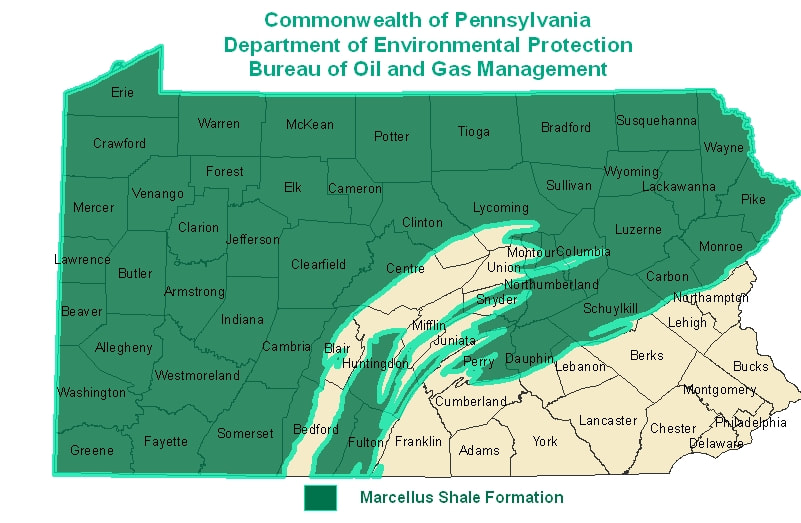
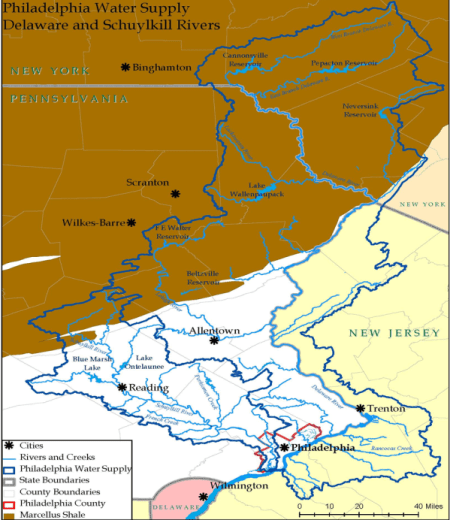
Yes. Natural gas drilling is expected to occur over 100 miles from the City of Philadelphia, within the northernmost reaches of the Delaware River watershed. This depicts the areas of Marcellus Shale contained within the Delaware River Basin.
The Pennsylvania Department of Environmental Protection’s Office of Oil and Gas Management reviews and issues oil and gas drilling permits, inspects oil and gas drilling operations, and responds to complaints regarding oil and gas development. The Delaware River Basin Commission (DRBC) is also responsible for safeguarding the basin’s waters from the effects of natural gas development activities. Other agencies that monitor the effects of drilling on water quality and aquatic life include the Pennsylvania Fish and Boat Commission, the U.S. Environmental Protection Agency, the United Stated Geological Survey, the U.S. Fish and Wildlife Service, and county conservation districts.
Oil and gas exploration are regulated under Title 25 of the Pennsylvania State Code (see links to relevant chapters below).
- Chapter 78: Oil and Gas Wells
- Chapter 95: Wastewater Treatment Requirements
- Chapter 102: Erosion and Sediment Control
Interstate agencies, such as the Delaware River Basin Commission, are working to adopt regulations to complement state regulations by providing additional water quality and protection.
Natural gas deposits are located below groundwater aquifers, and drillers are required to implement methods that protect the groundwater supply. Drillers install steel and cement barriers called casings, which are designed to prevent liquids used in the drilling process from mixing with groundwater in aquifers.
Protecting Philadelphia’s drinking water sources is a primary mission of PWD and the assurance of a sustainable, clean source of drinking water for our citizens is embedded in all PWD operations. Therefore, PWD has been actively following and tracking the development of the natural gas industry since its introduction in Pennsylvania. PWD will continue to closely monitor projects upstream that may affect Philadelphia’s drinking water and will be the first to raise any concerns if there is the potential for drinking water safety to be compromised.
PWD believes that with proper regulatory oversight, the drilling of natural gas may be undertaken in a safe and environmentally sustainable manner. In order to accomplish this goal, PWD’s preference would be for a long term cumulative impact study to be performed. In the absence of this, PWD will continue to work with our regulatory partners to require proper regulations and legislation, combined with continuous monitoring and careful controls on the discharge of wastewater, to ensure the protection of the Delaware River and PWD’s drinking water intakes. For a more detailed summary of PWD’s overall Marcellus Shale policy goals, please refer to the 2011 position paper above or download it.
PWD monitors its drinking water every day at its three water treatments plants and at points throughout its 3,000 mile delivery system. Our water is consistently better than Safe Drinking Water Act (SDWA) standards and has always met all heath standards. PWD also maintains and operates the Delaware Valley Early Warning System, which has the ability to mass notify downstream intakes if a contamination event occurs. PWD also continuously monitors water quality throughout the Schuylkill and Delaware watersheds.
PWD has a nationally recognized Source Water Protection Program. PWD’s Source Water Protection Program embodies the department’s multi-barrier approach to ensuring the safety and quality of Philadelphia’s drinking water. Philadelphia’s Source Water Program staff work closely with the department’s treatment plant managers and operators to anticipate and respond to emergencies and challenges to conventional treatment techniques. The Source Water Protection Program takes a scientific approach to understanding Philadelphia’s water supply characteristics, including water quality conditions, major sources of actual and potential contamination, water availability, flow patterns and management practices, and tidal and reservoir impacts.